
Why Warehouse Execution Breaks Down During the Shift
Warehouse plans often look efficient at the start of the day. But operational conditions change constantly. When disruptions occur, static plans quickly become outdated, forcing supervisors to manually reprioritize tasks and recover productivity.
Why Warehouse Execution Breaks Down
Warehouse execution breaks down because operational conditions change continuously throughout the shift. Order spikes, transportation delays, labor shortages, and automation variability disrupt static plans, forcing supervisors to constantly rebalance priorities across the facility.

The Industry Belief
Better Planning Improves Execution
Most warehouses rely on planning tools to coordinate daily operations.
Common approaches include:
- wave planning
- slotting strategies
- task prioritization rules
- labor scheduling
These tools help define how the shift should run.
Industry Report
The Missing Link to Resource Utilization
The Reality
The Warehouse Operates in Real Time
Warehouse environments rarely follow static plans.
Throughout the shift, conditions change due to:
- unexpected order surges
- late inbound deliveries
- labor availability changes
- automation slowdowns
- transportation schedule changes
As these disruptions accumulate, original plans become obsolete.


The Firefighting Cycle in Warehouse Execution
Once plans break down, supervisors must manually recover operations.
Typical responses include:
- reprioritizing picking waves
- reallocating workers across zones
- expediting urgent orders
- adjusting shipping schedules
This constant intervention creates decision overload and operational instability.
Why Traditional Systems Cannot Adapt
Most warehouse technology platforms were designed for planning rather than continuous operational adjustment.
Limitations include:
Warehouse Management Systems
Execute predefined tasks but cannot dynamically reprioritize workflows.
Planning tools
Optimize schedules before the shift begins but cannot adapt to real-time disruption.
Manual Intervention
Supervisors become the primary decision engine.
As complexity increases, the volume of operational decisions grows rapidly.
What High-Performing Warehouses Do Differently
Leading operations manage execution dynamically rather than relying solely on static plans.
They continuously coordinate:
- task prioritization
- labor allocation
- order sequencing
- operational bottlenecks
This allows operations to adapt quickly to changing conditions.
A New Approach to Warehouse Execution
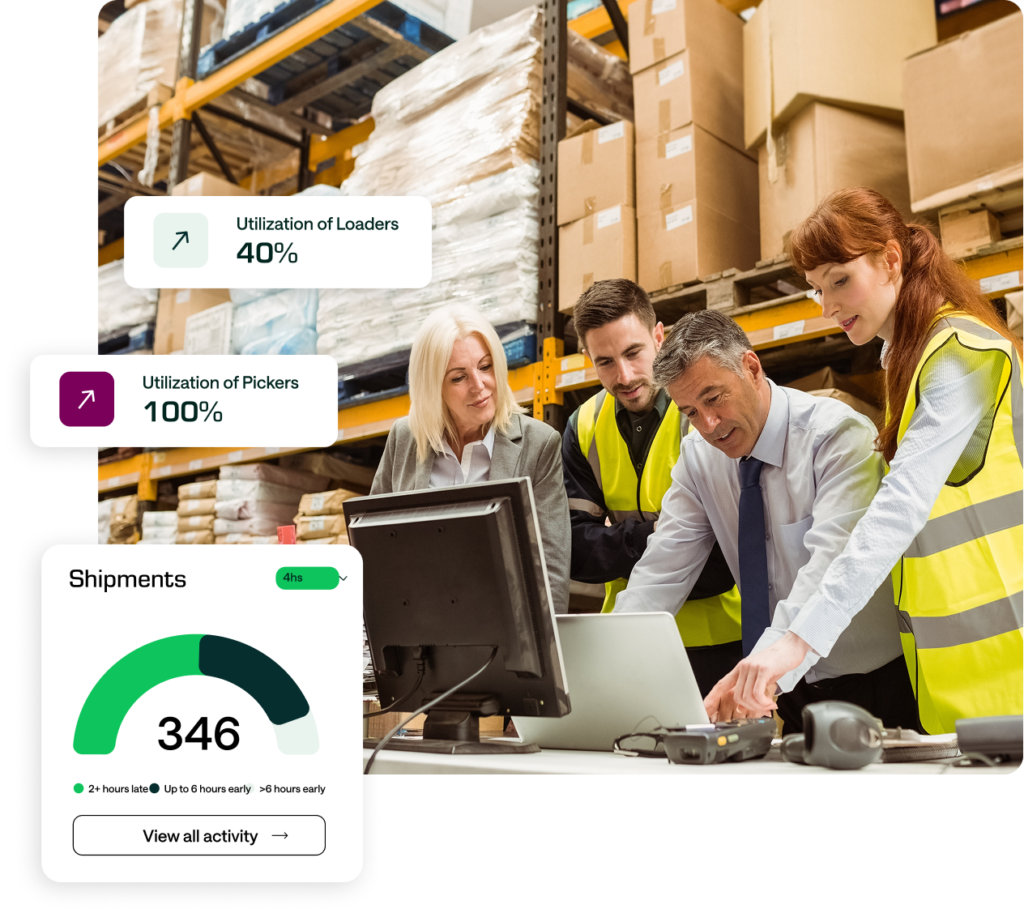
Modern warehouses are introducing decision intelligence that continuously evaluates operational conditions.
The Warehouse Decision Agent analyzes operational data and adjusts execution priorities to maintain productivity as disruptions occur.
Meet the Warehouse Decision Agent
Efficient dock operations require coordination across warehouse and transportation activities.
The Warehouse Decision Agent continuously synchronizes operational decisions to maintain consistent dock throughput.
Why This Helps
Operational Impact
Organizations improving warehouse execution coordination typically achieve:
more consistent throughput
fewer operational disruptions
improved order fulfillment reliability
reduced manual intervention
higher operational stability
What Our Customers Are Saying
What happens when decisions work together
9-14%
average productivity gains per facility
“It doesn’t matter who is leading the team… You could have a brand-new employee working on an off-shift and have the same information and the same decision-making capability as a 15-20-year employee.”
Warehouse Orchestration Sr Manager
Fortune 100 F&B Company
Frequently Asked Questions
When you’re doing novel things in the supply chain industry, we get many of the same questions pretty frequently. We’ve answered some of them here and are happy to talk about any of them in further detail.
What causes dock congestion in warehouses?
Dock congestion occurs when warehouse operations are not synchronized with trailer arrivals. If labor availability, order staging, and shipment readiness are misaligned with dock appointments, trailers must wait for the warehouse to catch up, creating delays and reducing dock throughput.
Why do trailers wait at warehouse docks?
Trailers often wait because the warehouse is not ready to load or unload them. Labor shortages, incomplete order picking, limited staging space, or delayed inbound processing can prevent dock doors from turning trailers quickly.
What is trailer detention in warehouse operations?
Trailer detention occurs when a truck remains at a warehouse dock longer than the scheduled loading or unloading time. Detention typically happens when warehouse workflows are not aligned with transportation schedules, forcing carriers to wait.
How can warehouses reduce trailer detention and dock delays?
Warehouses reduce trailer detention by coordinating labor allocation, order staging, and dock scheduling with transportation arrival times. When internal warehouse operations are synchronized with trailer flow, dock throughput improves and detention costs decrease.
What is dock orchestration in warehouse operations?
Dock orchestration is the coordination of labor, staging capacity, shipment readiness, and trailer arrivals to ensure freight moves efficiently through warehouse dock doors without delays or congestion.
Ready to Run Smarter?
Every warehouse is unique. Let us help you solve your biggest challenges with solutions tailored to your operations.