
Why Warehouse Labor Plans Break Down
Labor plans don’t fail because warehouses lack schedules. They fail because static plans cannot keep up with the reality of daily warehouse volatility.
Why Warehouse Labor Planning Fails
Warehouse labor planning fails because schedules are created before the shift begins while warehouse conditions change continuously throughout the day. Transportation delays, order spikes, automation variability, and labor shortages quickly invalidate static plans, forcing supervisors to manually rebalance labor across the facility.

The Industry Belief
Better Labor Planning Will Solve the Problem
Most warehouses believe the answer to labor inefficiency is better warehouse labor planning.
Operations invest in:
- labor scheduling systems
- workforce planning tools
- productivity standards
- improved demand forecasts
The assumption is simple:
If the labor plan is accurate enough, the shift will run efficiently.
But the reality of warehouse operations tells a different story.
Download Whitepaper
The High Cost of Labor Firefighting and Systemic Attrition
The Reality
Warehouse Conditions Change Constantly
Modern warehouses operate in environments defined by constant volatility.
Operational conditions change throughout the shift due to:
- inbound transportation variability
- shifting order profiles
- automation performance fluctuations
- labor availability changes
- changing shipping priorities
These disruptions make static labor scheduling in warehouses difficult to sustain.
A labor plan built at the beginning of the shift quickly becomes outdated.
Supervisors must then continuously rebalance work across the facility to maintain warehouse labor efficiency.


The Firefighting Cycle That Destroys Labor Efficiency
When labor plans fail, supervisors are forced into reactive decision making.
They spend most of the shift:
- moving workers between work zones
- approving overtime to recover lost productivity
- reacting to downstream bottlenecks
- manually prioritizing tasks to meet shipping deadlines
This constant firefighting creates a cycle that reduces labor utilization and increases operational instability.
Over time, labor productivity declines and operational costs increase.
Why Traditional Warehouse Systems Cannot Solve This
Most warehouse systems were designed for task execution, not for dynamic workforce planning in warehouse operations.
Common system limitations include:
Warehouse Management Systems (WMS)
Execute tasks but do not optimize warehouse labor allocation.
Labor Management Systems (LMS)
Measure productivity but cannot dynamically rebalance labor across the facility.
Manual Labor Planning Tools
Spreadsheets and static schedules cannot react to real-time disruptions.
As operational complexity grows, supervisors become the primary decision engine.
This creates decision overload across warehouse operations.
What High-Performing Warehouses Do Differently
Leading distribution centers recognize that labor planning alone cannot solve operational volatility.
Instead of relying on static schedules, they coordinate decisions across the facility in real time.
Effective operations continuously optimize:
- labor allocation
- order sequencing
- automation capacity
- inbound and outbound flow
This approach improves warehouse labor optimization and stabilizes productivity even when conditions change.

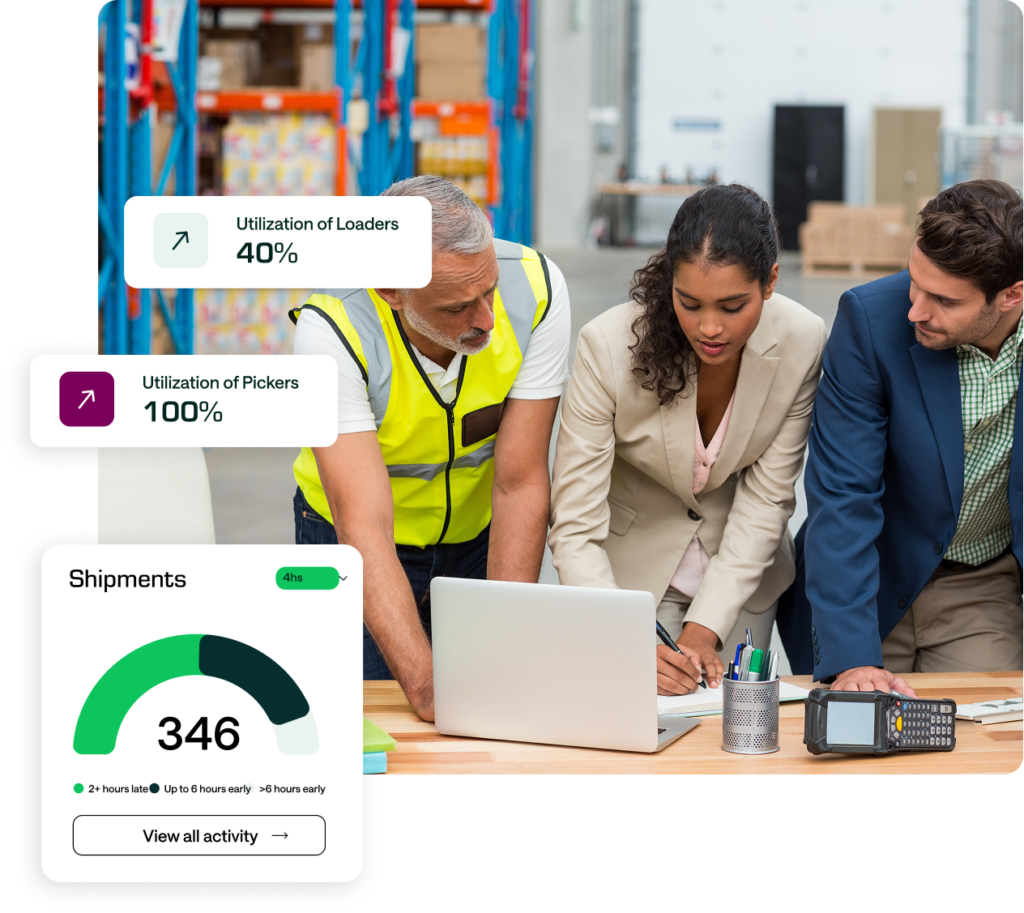
A New Approach to Warehouse Labor Optimization
Modern warehouses are introducing a decision layer designed to continuously improve operational flow.
The Warehouse Decision Agent analyzes real-time warehouse data across labor, order flow, and operational constraints to determine the best way to allocate work across the facility.
Instead of static labor plans, operations benefit from continuous optimization that adapts as conditions change.
Meet the Warehouse Decision Agent
Warehouse operations are becoming too complex to manage with static planning tools alone.
The Warehouse Decision Agent provides the decision intelligence required to continuously optimize labor allocation and maintain productivity across the facility.
Why This Helps
Operational Impact
Organizations that implement intelligent warehouse labor optimization typically achieve measurable improvements across key operational metrics.
Common performance improvements include:
higher labor utilization percentage
lower overtime percentage
improved units per labor hour
lower labor cost per unit
reduced workforce turnover
These improvements stabilize operations while improving overall warehouse labor efficiency.
What Our Customers Are Saying
What happens when decisions work together
9-14%
average productivity gains per facility
“It doesn’t matter who is leading the team… You could have a brand-new employee working on an off-shift and have the same information and the same decision-making capability as a 15-20-year employee.”
Warehouse Orchestration Sr Manager
Fortune 100 F&B Company
Frequently Asked Questions
When you’re doing novel things in the supply chain industry, we get many of the same questions pretty frequently. We’ve answered some of them here and are happy to talk about any of them in further detail.
Why does warehouse labor planning fail?
Warehouse labor planning fails because static schedules cannot adapt to operational volatility such as transportation delays, order spikes, automation variability, and labor availability changes.
What is warehouse labor optimization?
Warehouse labor optimization is the process of dynamically allocating workers across tasks and work zones to maximize productivity, improve labor utilization, and reduce labor costs.
How can warehouses improve labor utilization?
Warehouses improve labor utilization by continuously adjusting labor allocation based on real-time operational conditions rather than relying solely on static labor schedules.
What causes high warehouse overtime?
Warehouse overtime often occurs when labor plans break down due to operational disruptions, forcing supervisors to extend shifts in order to recover lost productivity and meet shipping deadlines.
Ready to Run Smarter?
Every warehouse is unique. Let us help you solve your biggest challenges with solutions tailored to your operations.