The Warehouse Execution System Multiverse: Two Paths, One Choice
Warehouses are reaching an inflection point. Despite being data-rich, many still operate much as they did a decade ago—through manual, inconsistent, and often unreliable decision-making. Add in growing complexity, scarce labor, and expensive automation, and it’s no wonder warehouse leaders are looking for new solutions.
For many, the first stop is a Warehouse Execution System (WES). At first glance, WES seems like the right answer—bridging the gap between WMS and automation, keeping robots and equipment moving without conflict. But as companies quickly learn, traditional WES can only take them so far.
The Limits of Traditional WES
While WES helps coordinate machines, it doesn’t connect the dots across the rest of the warehouse. Labor scheduling, dock planning, and inventory flows still depend on manual effort. The outcome is limited:
- Small productivity gains instead of transformation
- Ongoing firefighting when disruptions arise
- Automation that too often creates new bottlenecks
- ROI that flattens before it delivers real value
This is the universe of incrementalism—“do better, do better”—without ever breaking through to something fundamentally different.
The Decision Agent Advantage
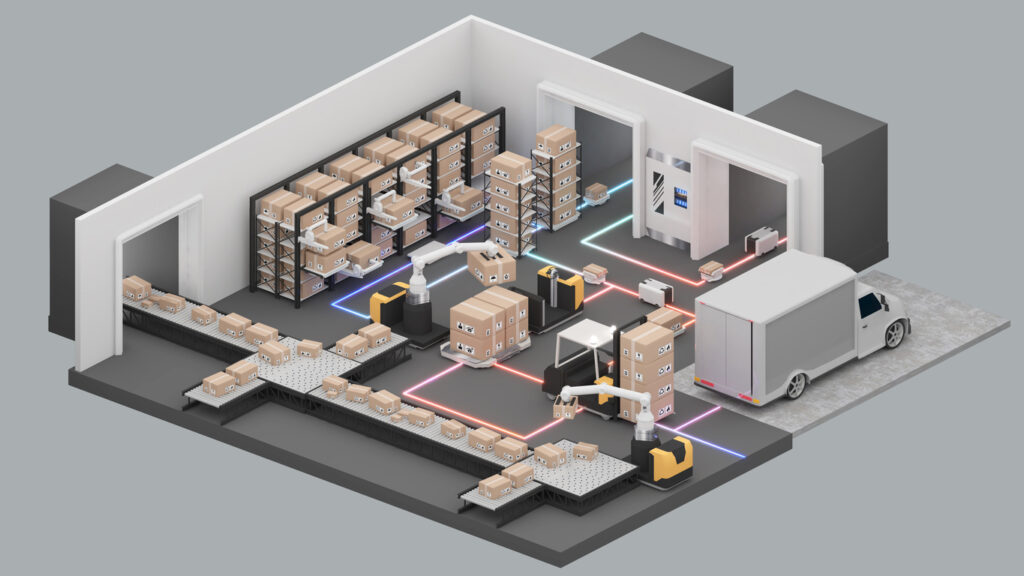
A Warehouse Decision Agent offers a very different path. Instead of narrowly managing machines, it orchestrates the entire warehouse. By harmonizing data across WMS, LMS, YMS, robotics, and planning tools, a Decision Agent continuously synchronizes labor, docks, inventory, and automation to maximize flow.
The results are transformational:
- Autonomous and reliable execution
- Real-time response to disruptions like late trucks or labor shortages
- Higher throughput and productivity with less overtime
- Consistency across sites, not just isolated fixes
In short, where traditional WES stops at incremental efficiency, the Decision Agent enables warehouses to run as truly autonomous, consistent, and reliable operations.
Why This Matters Now
As supply chains grow more complex and customer expectations rise, warehouses cannot afford to remain stuck in reactive mode. Leaders have a choice:
- Stay in the WES universe of incremental improvements, or
- Step into the Decision Agent universe of transformation.
The question is no longer whether you need a WES, it’s whether you need something more.
👉 Download the full whitepaper to explore both paths in detail and see how Decision Agents are changing the future of warehouse execution.